PHYSICS & BUDDHISM
During my training as a physicist, I learned not only about the laws of nature, but also about the tools – both mathematical and technical – neccessary to examine, understand, classify and critically question my observations of the outside world. When I turn my gaze inward, I recognise remarkable parallels in Buddhist teachings and techniques. This may seem surprising at first, but on closer inspection it seems to me to be only logical, sensible and the only possibility, because ultimately there is only “one nature” – where else should a boundary between the “inner and outer worlds” lie or be defined?
In my opinion, a similar point of view is reflected in the efforts of His Holiness the Dalai Lama, who has been engaging in dialogue with scientists around the world for decades. From 2002 to 2004, I played a small part in his project “Science Meets Dharma” (Dharma refers to the Buddhist teachings) when I taught four Tibetan Buddhist monks the laws of mathematics, physics and chemistry at the Tibet Institute in Rikon, Switzerland. In return, they introduced me to Buddhism, a connection that continues to this day and is becoming ever deeper.
It is not only in quantum physics that frequently cited parallels between physical and Buddhist laws can be found, but also in classical physics. Here are a few examples: In Newton’s third law (actio = reactio), I recognise the Buddhist principle of cause and effect (karma), and in the law of conservation of energy, I recognise the principle of a “mind continuum” that transcends coming and going, that is indestructible and beyond duality. Just as various energies on the external level can be converted and utilised by means of specific technologies (for example, water or nuclear power can be converted into electrical energy and used accordingly), systematically applied Buddhist techniques (breathing techniques, yoga, meditation, etc.) can transform mental energies (emotions, motivations, aspirations, etc.) on the inner level of the body and on the subtle or so-called secret level of the mind.
BIOSTATISTICS & KU NYE
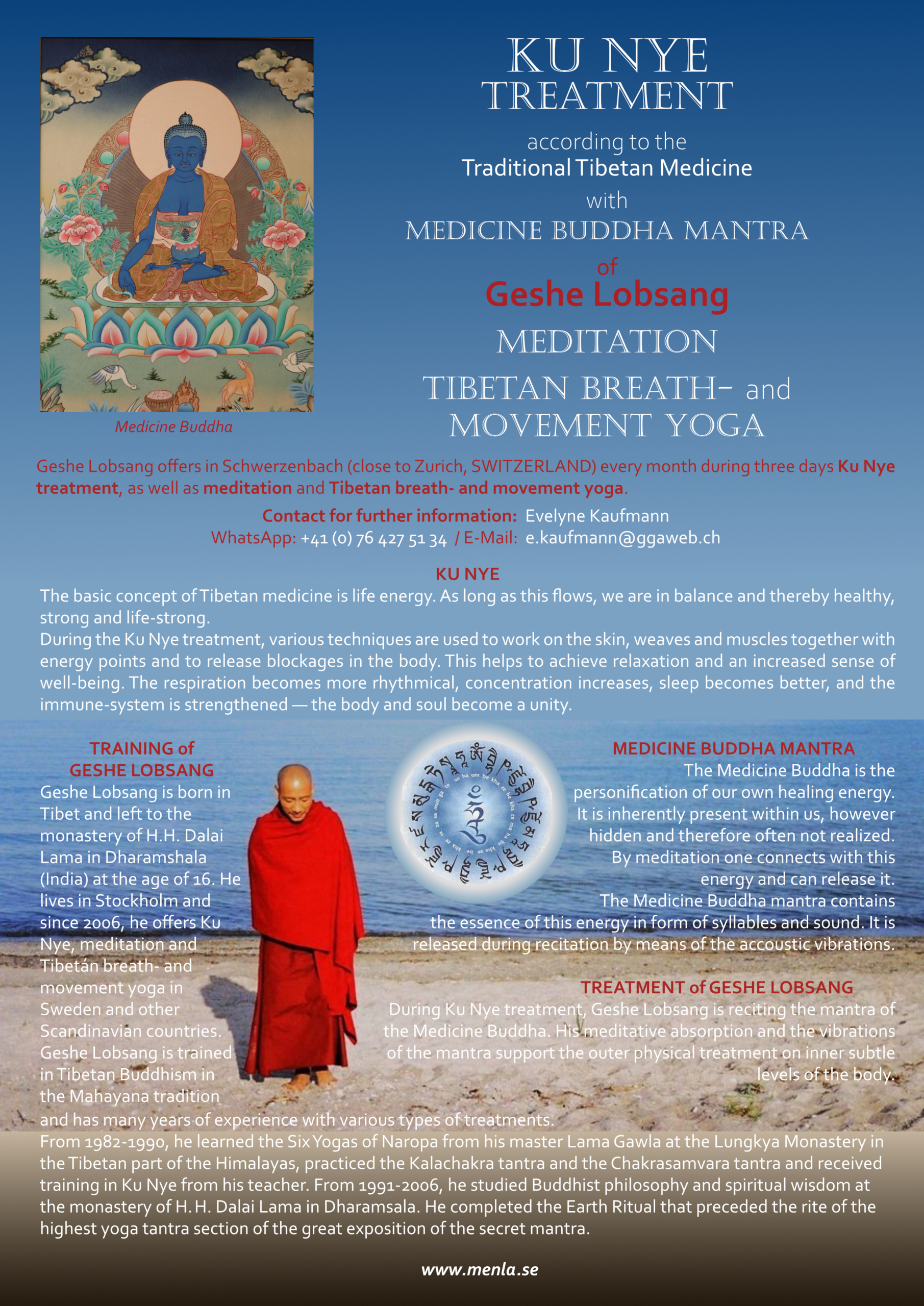
After my roots in Tibetan Buddhism began to grow deeper and deeper in 2002 –particularly due to my activities in “Sciende Meets Dahrma” with the four monks at the Tibet Institute in Rikon – they were further deepened in 2023 through my encounter with another Tibetan Buddhist monk and yogi, Geshe Lobsang Dakpa. Geshe Lobsang grew up in Tibet, where he first learned the technique of Ku Nye from his mother as well as Buddhist philosophy and meditation from both of his his parents and also other lamas. He deepened this knowledge, his experience and skills during the following years at the monastery of H.H. Dalai Lama in Dharamshala and in Nepal (see his description below).
My longing to improve the situation of patients cannot only be found in my scientific way of working as a biostatististician, but also in my company philosophy. Similar to the above-mentioned parallels between the laws and techniques of natural science and those of Buddhism, I see analogous parallels in my work as a biostatistician and that of Geshe Lobsang: While my biostatistical analyses and work contribute to improvements on the external level of Western medicine, his Ku Nye treatments, teachings in philosophy, meditation and yoga contribute to the individual well-being of each person. This happens not only on the outer physical level, but also on the inner level of the body and the so-called secret level of the mind.
Based on my own profound experience with Ku Nye with Geshe Lobsang, I would like to offer the opportunity to access his treatments to anyone interrested in it. In addition to Ku Nye, he also offers meditation and Tibetan breathing and movement yoga.
If you are interested and want to know more, please feel free to contact me!
Tashi delek བཀྲ`ཤིས`བདེ`ལེགས།

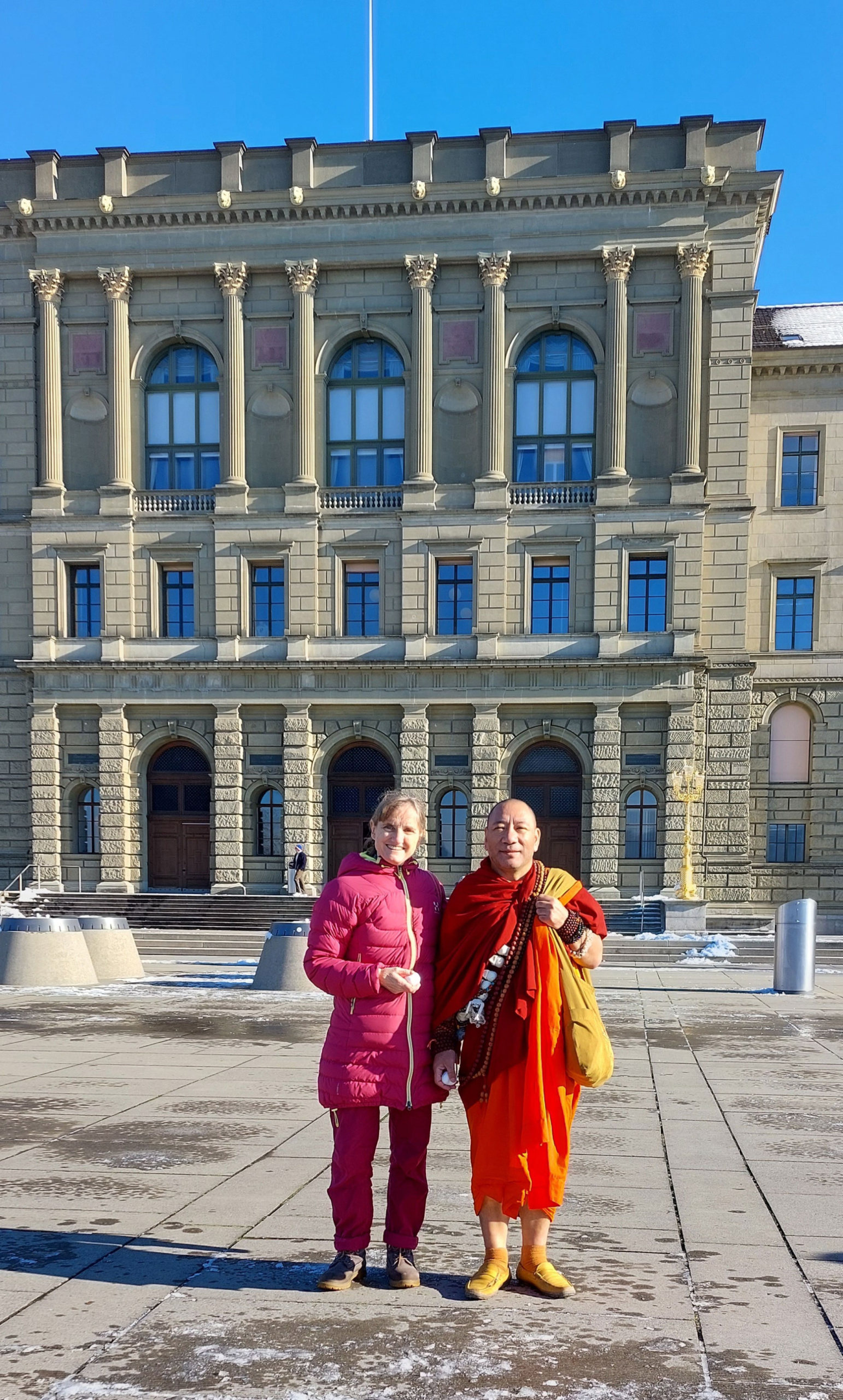
Evelyne Kaufmann & Lobsang Dakpa
in front of ETH Zürich, Jan. 2024
GESHE LOBSANG
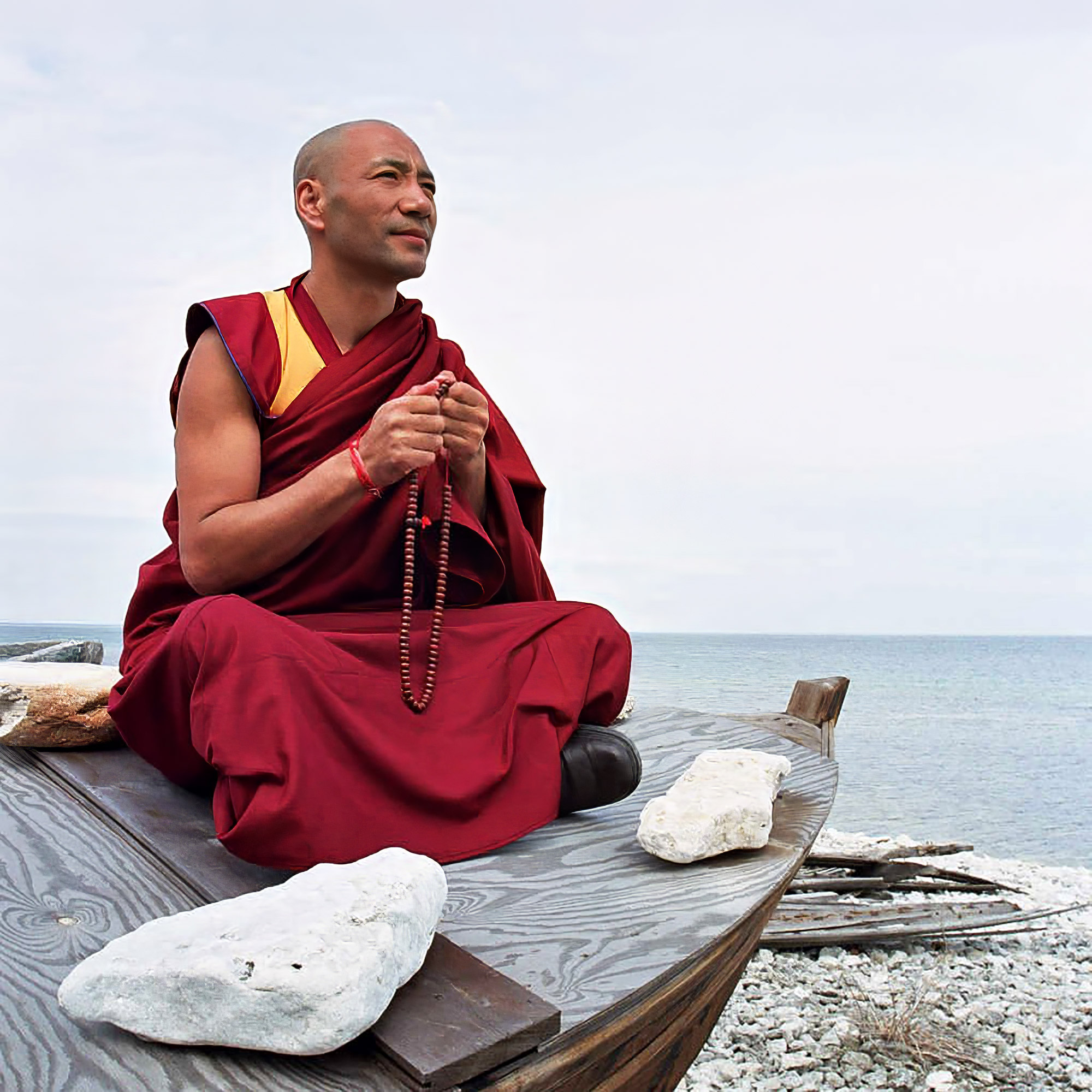
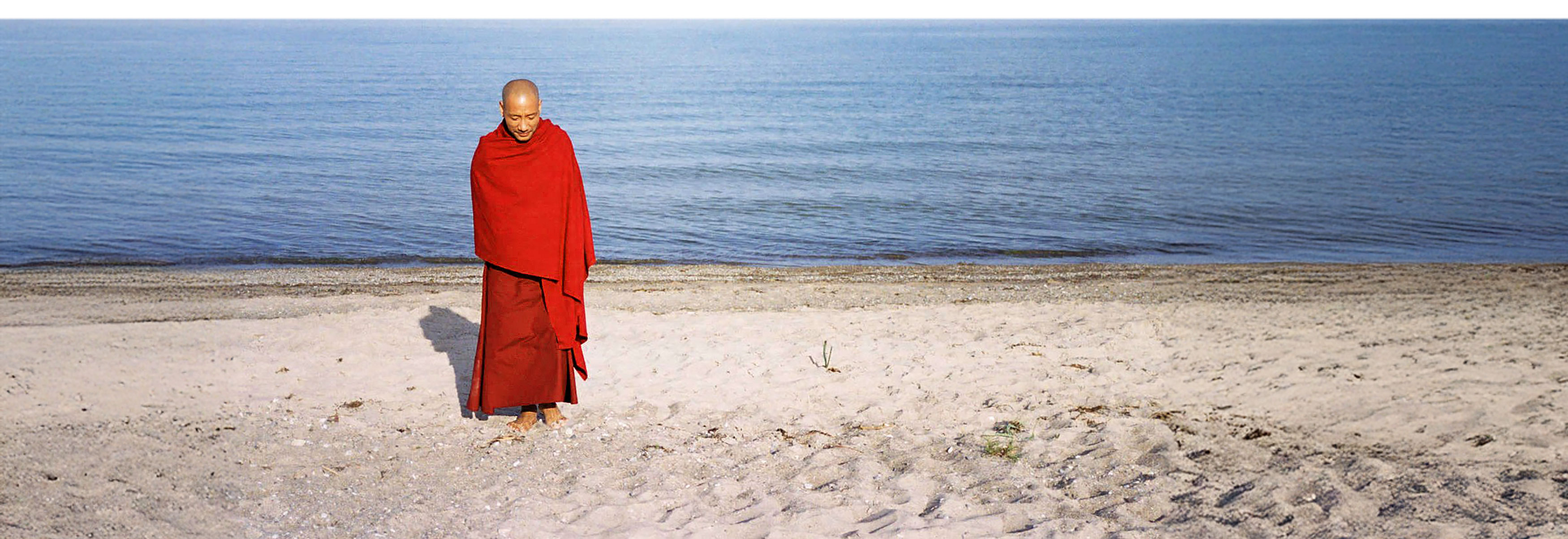
Geshe Lobsang was born 1974 in Tibet. He got his first teachings about Buddhist philosophy, meditation and Ku Nye as a chield from his parents. From 1982 to 1990, he studied the Six Yogas of Naropa with his master Lama Gawla at Lungkya Monastery in the Tibetan part of the Himalayas, practised the Kalachakra Tantra and the Chakrasamvara Tantra, and received furhter training in Ku Nye. At the age of 17, he left to Dharamshala (India) to join the monastery of His Holiness the Dalai Lama. There, he studied from 1991 to 2006 Buddhist philosophy, psychology and spiritual wisdom. He completed the earth ritual that preceded the rite of the highest yoga tantra section of the great exposition of the secret mantra.
Since 2006, he is living in Stockholm and offers Ku Nye, teachings in Buddhist philosophy, meditation, Tibetan breathing and movement yoga in Sweden and other Scandinavian countries. He is trained in Tibetan Buddhism in the Mahayana tradition and has many years of experience with various types of treatment in traditional Tibetan medicine.
To the Webseite of Geshe Lobsang
Ku Nye
The fundamental concept of Tibetan medicine is life energy. As long as it flows, we are in balance and therefore healthy, strong and resilient.
During Ku Nye treatment, various techniques are used to work on the tissue and muscles together with energy points to release blockages. This promotes relaxation and increased well-being. Breathing becomes more rhythmic, concentration increases, sleep improves and the immune system is strengthened — body and mind unite.
During the Ku Nye treatments, Geshe Lobsang recites the mantra of the Medicine Buddha. His meditative concentration and the vibrations of the mantra support the external physical treatment on more subtle inner levels of the body.
Medicine Buddha
The Medicine Buddha is the personification of our own healing energy. It is always present within us, but hidden and therefore mostly unrecognised. Through meditation, we can connect with this energy and release it.
The Medicine Buddha Mantra contains the essence of this energy in the form of syllables and sound. When reciting the mantra, the healing energy is released on the inner level of the body through the acoustic vibrations and on the secret level of the mind through our concentration.